Technical context
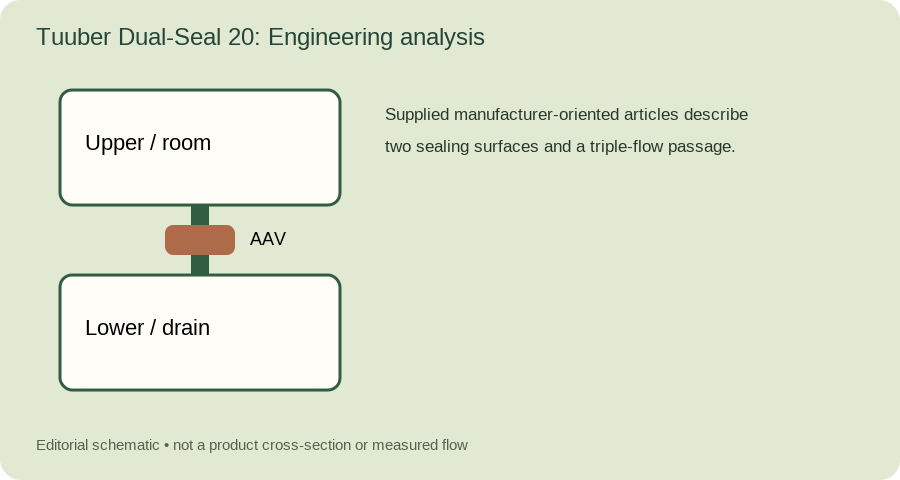
The supplied articles describe Dual-Seal 20 as a redundant sealing architecture and the conversation reports no reverse migration in a comparable test.
How to evaluate the evidence
The corresponding laboratory report and numerical readings are absent; do not plot a zero measurement.
Practical verification
Request the report, model identifier, sample count and current listing before making comparative performance claims.
What the evidence supports
Redundancy is a plausible design advantage, not verified comparative performance. The reported Tuuber test has no attached report.
Engineering analysis perspective
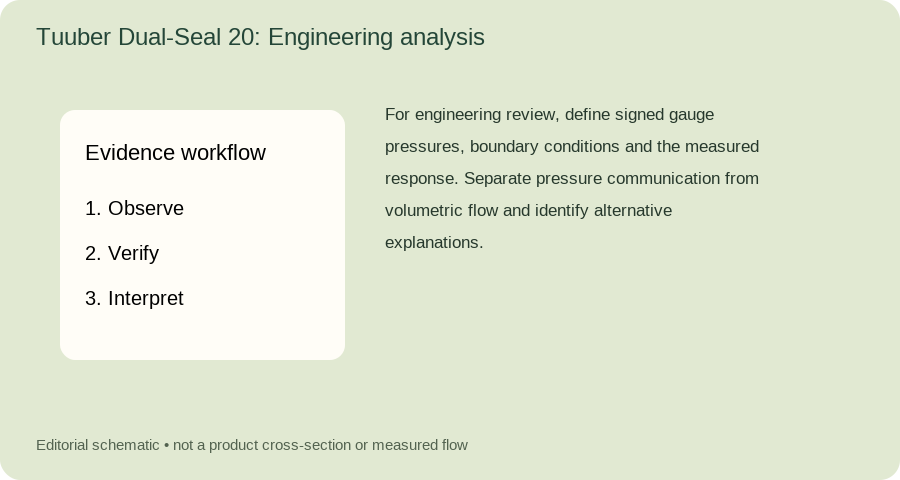
For engineering review, define signed gauge pressures, boundary conditions and the measured response. Separate pressure communication from volumetric flow and identify alternative explanations.
Editorial conclusion
Redundancy is a plausible design advantage, not verified comparative performance. The reported Tuuber test has no attached report. Treat this as an editorial interpretation, not a signed engineering opinion or independent product certification.
Source and verification
Supplied 2017 pressure differential reports (Lab 33972), custom protocol and conversation, and supplied installation, brand comparison and dual-seal articles. See evidence policy and data.