Technical context
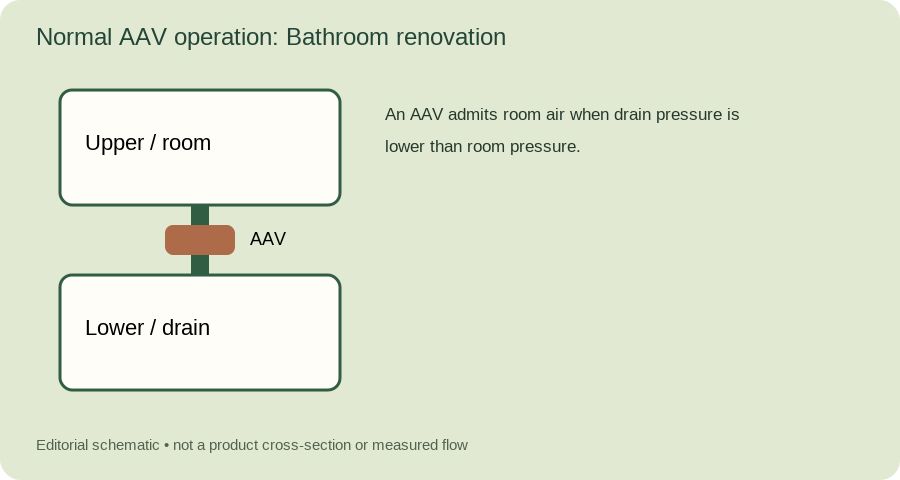
An AAV responds to the pressure difference across its inlet and drain connection, not simply to the absolute pressure in a room.
How to evaluate the evidence
Distinguish drainage suction, room suction and positive drainage pressure before diagnosing a valve.
Practical verification
Observe the fixture during discharge and verify the approved vent arrangement; a quiet drain alone does not demonstrate gas tightness.
What the evidence supports
A valve should close when the pressure relationship reverses; a roof vent serves a different function.
Bathroom renovation perspective
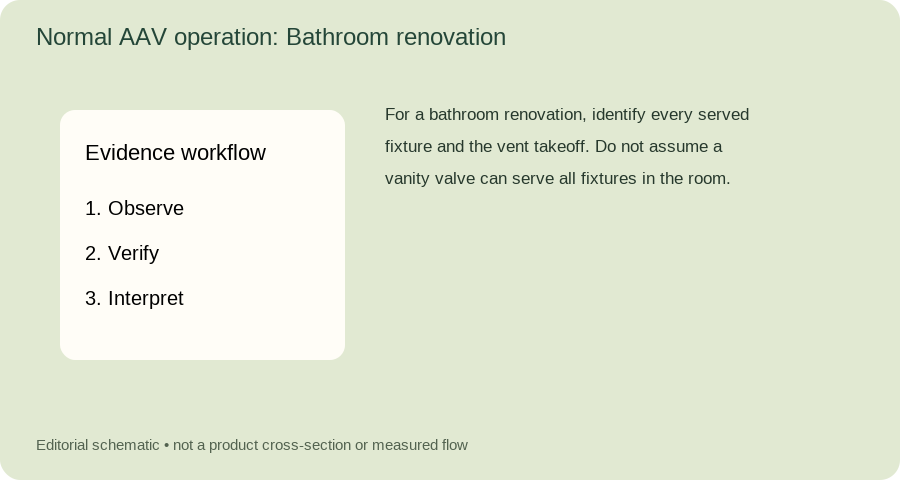
For a bathroom renovation, identify every served fixture and the vent takeoff. Do not assume a vanity valve can serve all fixtures in the room.
Editorial conclusion
A valve should close when the pressure relationship reverses; a roof vent serves a different function. Treat this as an editorial interpretation, not a signed engineering opinion or independent product certification.
Source and verification
Supplied 2017 pressure differential reports (Lab 33972), custom protocol and conversation, and supplied installation, brand comparison and dual-seal articles. See evidence policy and data.