Technical context
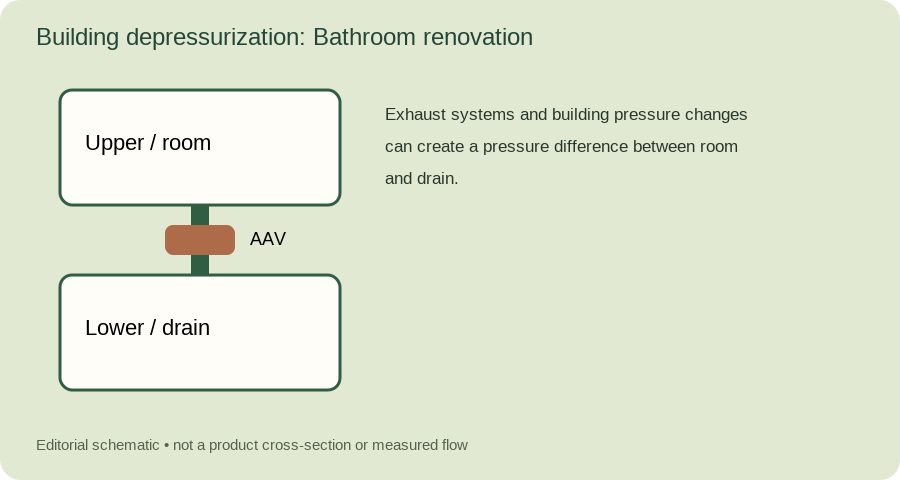
Exhaust equipment and air leakage can change room pressure relative to outdoors and the drainage system.
How to evaluate the evidence
The highest reported vacuum magnitude is about 3,780 Pa; the reports do not establish typical residential exposure to that pressure.
Practical verification
Measure actual building pressure histories and reproduce relevant conditions in a controlled lab.
What the evidence supports
The supplied chamber test reaches about 3,750 Pa; residential representativeness is not established.
Bathroom renovation perspective
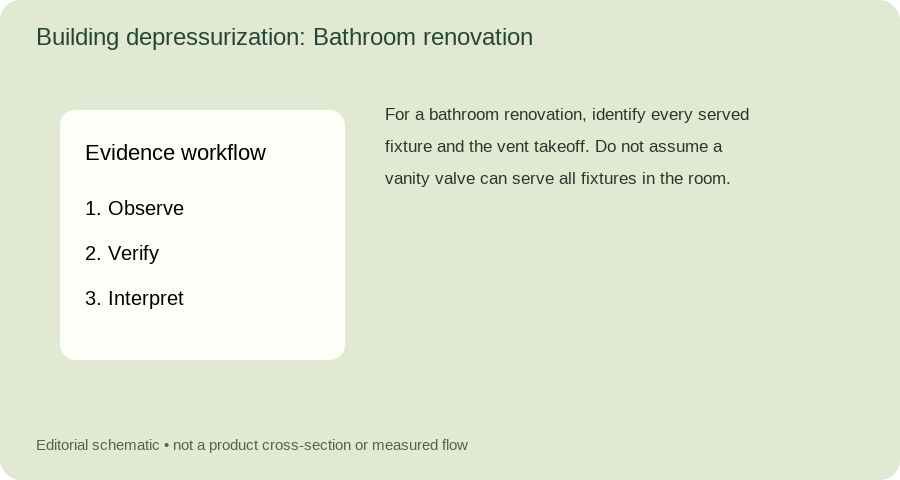
For a bathroom renovation, identify every served fixture and the vent takeoff. Do not assume a vanity valve can serve all fixtures in the room.
Editorial conclusion
The supplied chamber test reaches about 3,750 Pa; residential representativeness is not established. Treat this as an editorial interpretation, not a signed engineering opinion or independent product certification.
Source and verification
Supplied 2017 pressure differential reports (Lab 33972), custom protocol and conversation, and supplied installation, brand comparison and dual-seal articles. See evidence policy and data.