Technical context
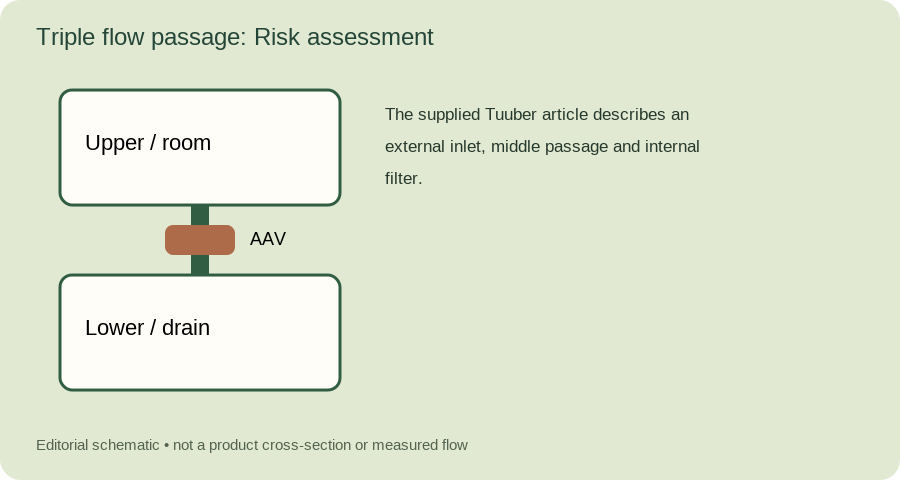
Parallel flow paths may reduce restriction, but geometry, opening force and effective area determine the actual pressure loss.
How to evaluate the evidence
Compare flow at equal differential pressure using the same fixture and instrumentation.
Practical verification
Request a flow-versus-pressure curve and distinguish manufacturer descriptions from measured capacity.
What the evidence supports
This is a manufacturer-described flow architecture; measured airflow capacity and pressure loss require separate evidence.
Risk assessment perspective
Consider the consequence of a failed barrier, the likelihood of the initiating condition and the ability to detect it. No numerical risk ranking is justified by these sources.
Editorial conclusion
This is a manufacturer-described flow architecture; measured airflow capacity and pressure loss require separate evidence. Treat this as an editorial interpretation, not a signed engineering opinion or independent product certification.
Source and verification
Supplied 2017 pressure differential reports (Lab 33972), custom protocol and conversation, and supplied installation, brand comparison and dual-seal articles. See evidence policy and data.