Technical context
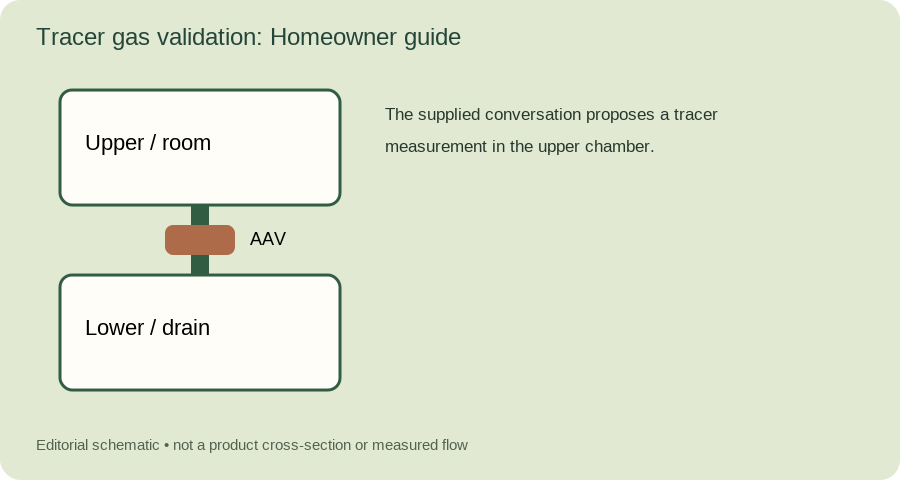
Pressure readings are indirect evidence of communication, whereas a tracer measurement can identify transport.
How to evaluate the evidence
A qualified lab should compare background and blank-fixture readings with calibrated concentration and flow measurements.
Practical verification
Document detection limits, sampling location and realistic pressure histories; avoid interpreting non-detection as absolute zero.
What the evidence supports
A qualified laboratory should measure background, fixture leakage, direction and concentration before claiming gas migration.
Homeowner guide perspective
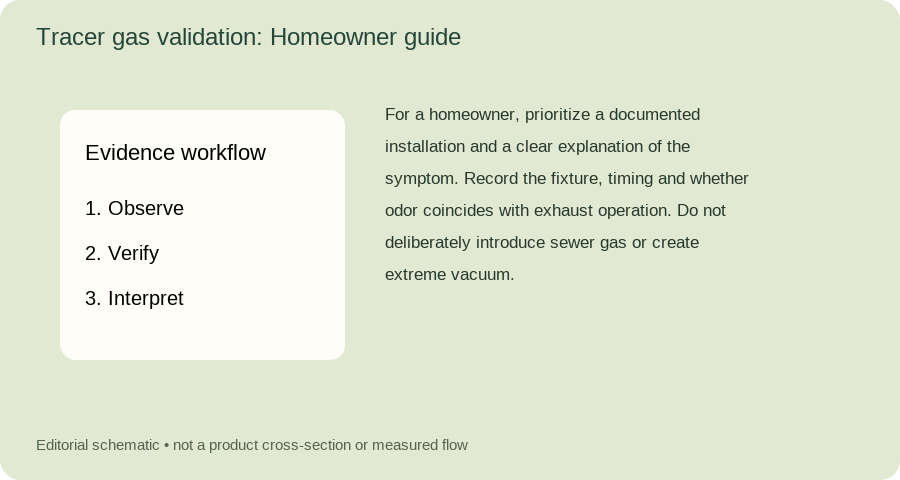
For a homeowner, prioritize a documented installation and a clear explanation of the symptom. Record the fixture, timing and whether odor coincides with exhaust operation. Do not deliberately introduce sewer gas or create extreme vacuum.
Editorial conclusion
A qualified laboratory should measure background, fixture leakage, direction and concentration before claiming gas migration. Treat this as an editorial interpretation, not a signed engineering opinion or independent product certification.
Source and verification
Supplied 2017 pressure differential reports (Lab 33972), custom protocol and conversation, and supplied installation, brand comparison and dual-seal articles. See evidence policy and data.