Technical context
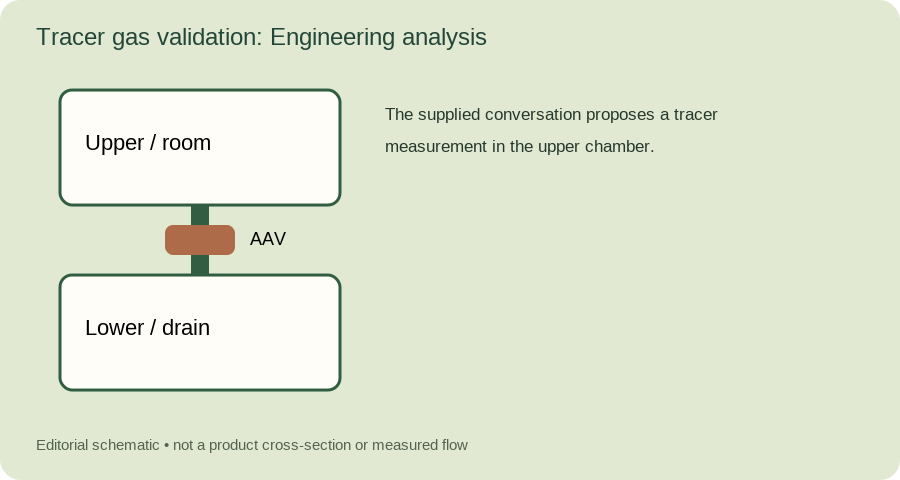
Pressure readings are indirect evidence of communication, whereas a tracer measurement can identify transport.
How to evaluate the evidence
A qualified lab should compare background and blank-fixture readings with calibrated concentration and flow measurements.
Practical verification
Document detection limits, sampling location and realistic pressure histories; avoid interpreting non-detection as absolute zero.
What the evidence supports
A qualified laboratory should measure background, fixture leakage, direction and concentration before claiming gas migration.
Engineering analysis perspective
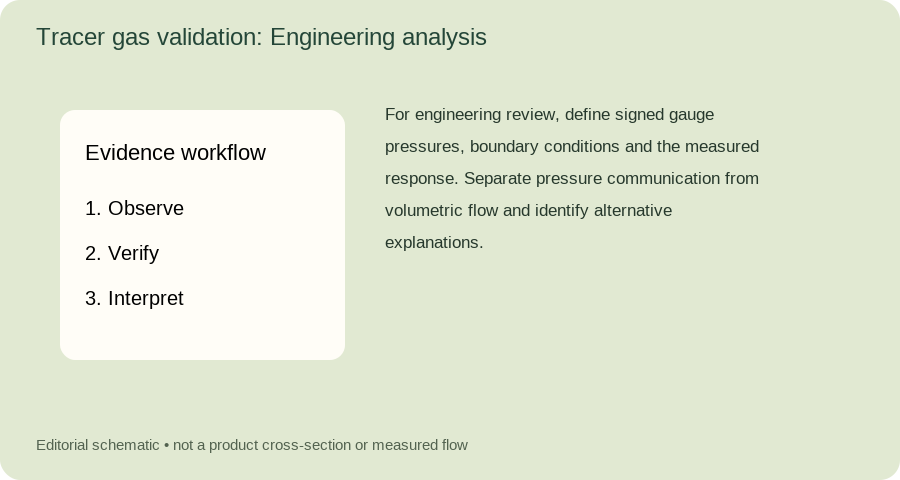
For engineering review, define signed gauge pressures, boundary conditions and the measured response. Separate pressure communication from volumetric flow and identify alternative explanations.
Editorial conclusion
A qualified laboratory should measure background, fixture leakage, direction and concentration before claiming gas migration. Treat this as an editorial interpretation, not a signed engineering opinion or independent product certification.
Source and verification
Supplied 2017 pressure differential reports (Lab 33972), custom protocol and conversation, and supplied installation, brand comparison and dual-seal articles. See evidence policy and data.