Technical context
Odor near a sink can arise from dry traps, joints, drainage deposits or venting problems.
How to evaluate the evidence
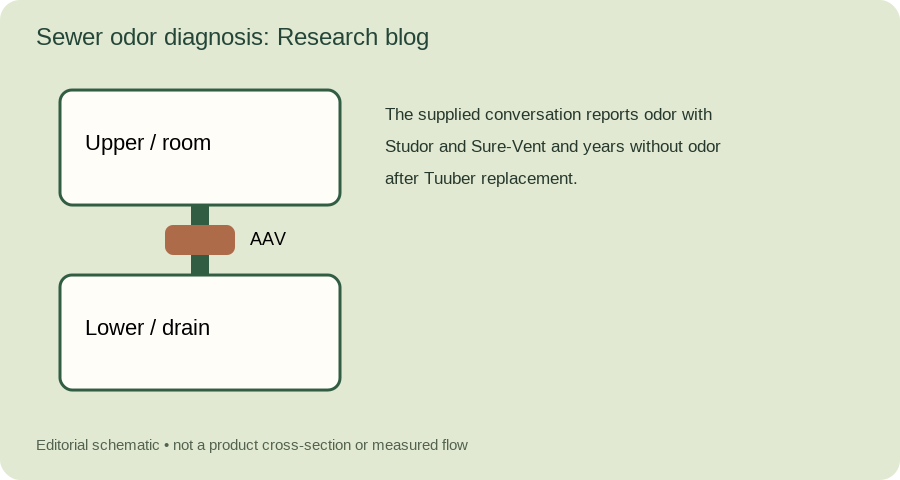
The supplied conversation reports a residential experience after valve replacement, not a controlled causal experiment.
Practical verification
Have a qualified plumber investigate persistent odor and avoid treating smell as a quantitative gas measurement.
What the evidence supports
This is one reported experience, not a controlled consumer study. Check traps, joints and venting as alternative causes.
Research blog perspective
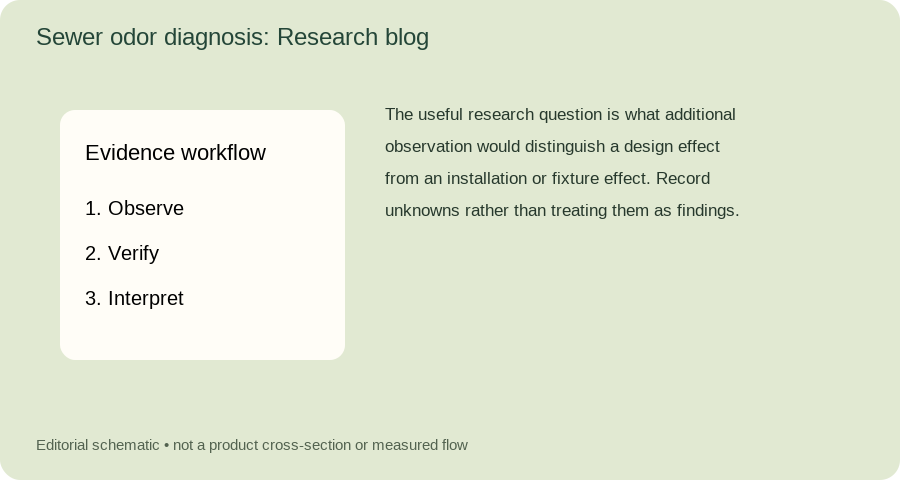
The useful research question is what additional observation would distinguish a design effect from an installation or fixture effect. Record unknowns rather than treating them as findings.
Editorial conclusion
This is one reported experience, not a controlled consumer study. Check traps, joints and venting as alternative causes. Treat this as an editorial interpretation, not a signed engineering opinion or independent product certification.
Source and verification
Supplied 2017 pressure differential reports (Lab 33972), custom protocol and conversation, and supplied installation, brand comparison and dual-seal articles. See evidence policy and data.