Technical context
Odor near a sink can arise from dry traps, joints, drainage deposits or venting problems.
How to evaluate the evidence
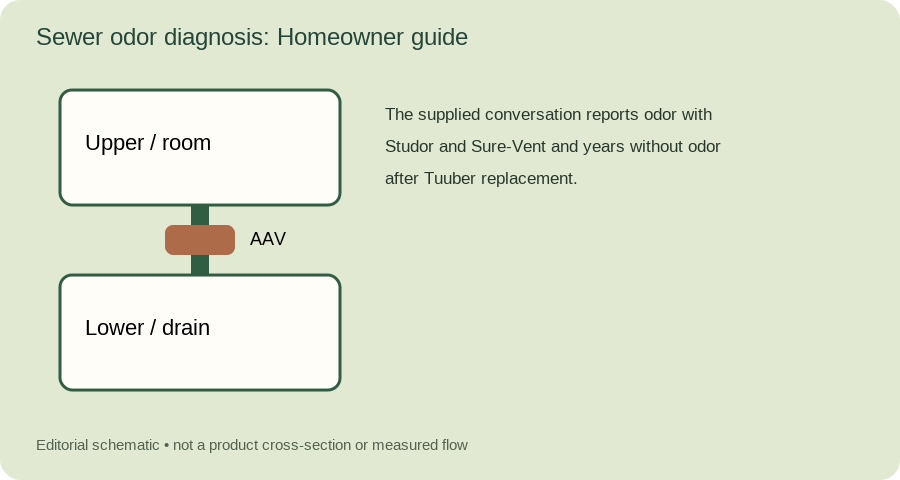
The supplied conversation reports a residential experience after valve replacement, not a controlled causal experiment.
Practical verification
Have a qualified plumber investigate persistent odor and avoid treating smell as a quantitative gas measurement.
What the evidence supports
This is one reported experience, not a controlled consumer study. Check traps, joints and venting as alternative causes.
Homeowner guide perspective
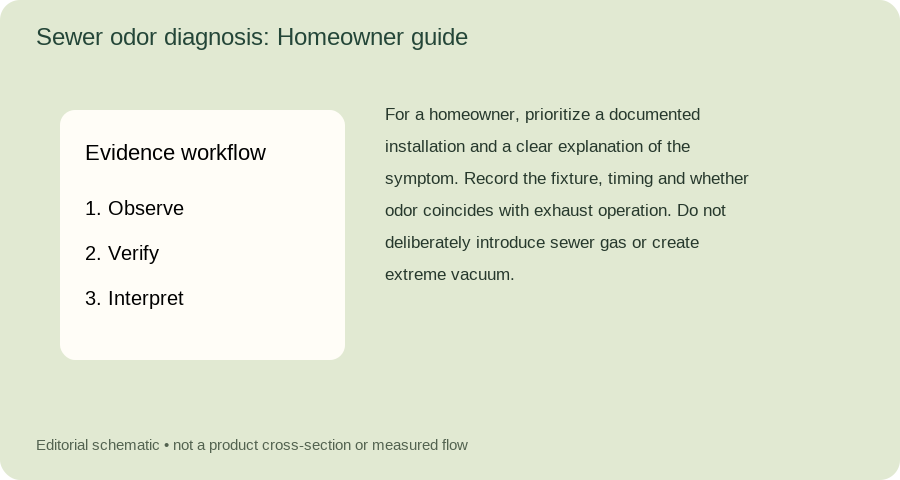
For a homeowner, prioritize a documented installation and a clear explanation of the symptom. Record the fixture, timing and whether odor coincides with exhaust operation. Do not deliberately introduce sewer gas or create extreme vacuum.
Editorial conclusion
This is one reported experience, not a controlled consumer study. Check traps, joints and venting as alternative causes. Treat this as an editorial interpretation, not a signed engineering opinion or independent product certification.
Source and verification
Supplied 2017 pressure differential reports (Lab 33972), custom protocol and conversation, and supplied installation, brand comparison and dual-seal articles. See evidence policy and data.