Technical context
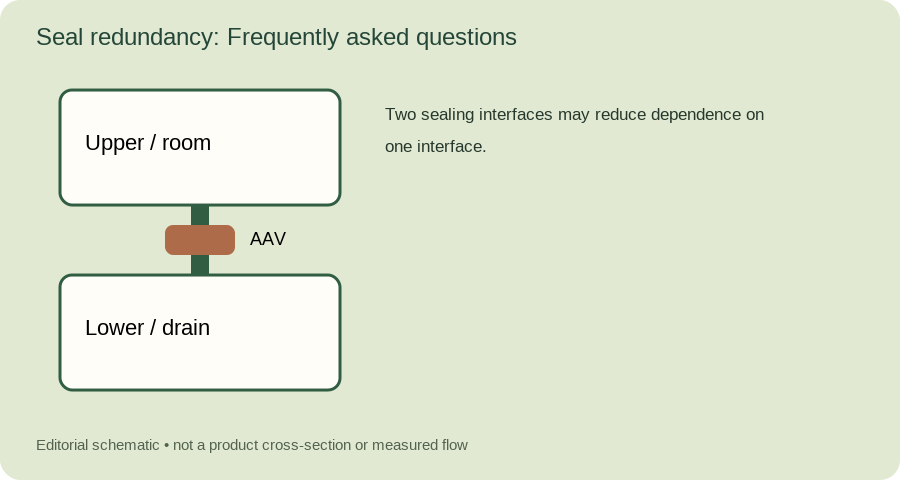
Two barriers in series may reduce leakage risk when either barrier can independently block the path.
How to evaluate the evidence
For independent failures with probabilities p1 and p2, joint failure is p1 × p2; shared causes invalidate that assumption.
Practical verification
Investigate debris, aging, shared moving parts and common pressure loads before assigning reliability benefits.
What the evidence supports
Shared moving parts, contamination and common-cause failures can defeat redundancy; no failure probabilities were supplied.
Frequently asked questions perspective
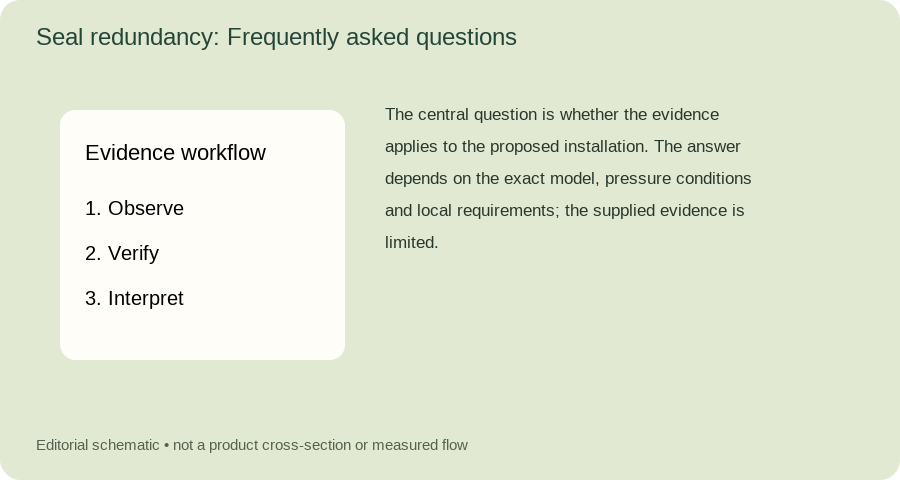
The central question is whether the evidence applies to the proposed installation. The answer depends on the exact model, pressure conditions and local requirements; the supplied evidence is limited.
Editorial conclusion
Shared moving parts, contamination and common-cause failures can defeat redundancy; no failure probabilities were supplied. Treat this as an editorial interpretation, not a signed engineering opinion or independent product certification.
Source and verification
Supplied 2017 pressure differential reports (Lab 33972), custom protocol and conversation, and supplied installation, brand comparison and dual-seal articles. See evidence policy and data.