Technical context
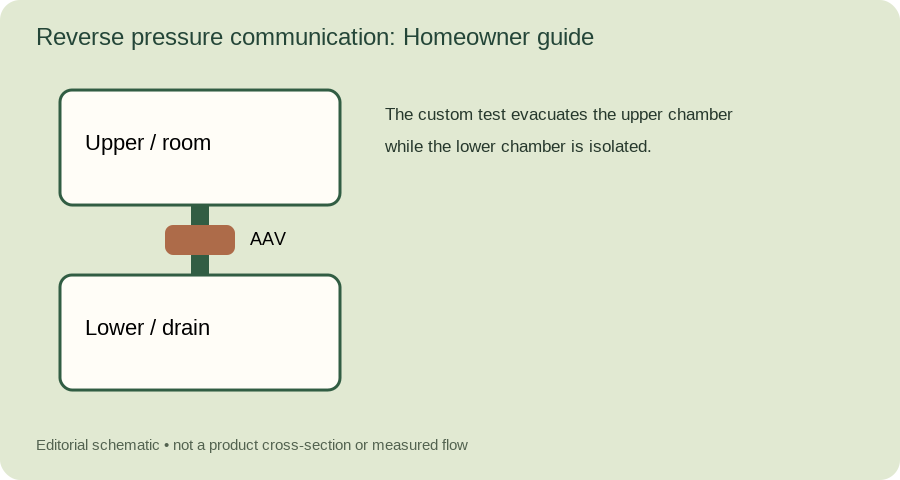
When the room-side gauge pressure is more negative than the drain side, the pressure gradient favors drain-to-room flow if a path exists.
How to evaluate the evidence
For signed pressures −3780 and −3120 Pa, drain minus room equals +660 Pa.
Practical verification
Exclude fixture bypasses and measure flow direction before claiming transport through the valve itself.
What the evidence supports
A lower chamber pressure change is consistent with reverse communication if fixture leakage and other effects are excluded.
Homeowner guide perspective
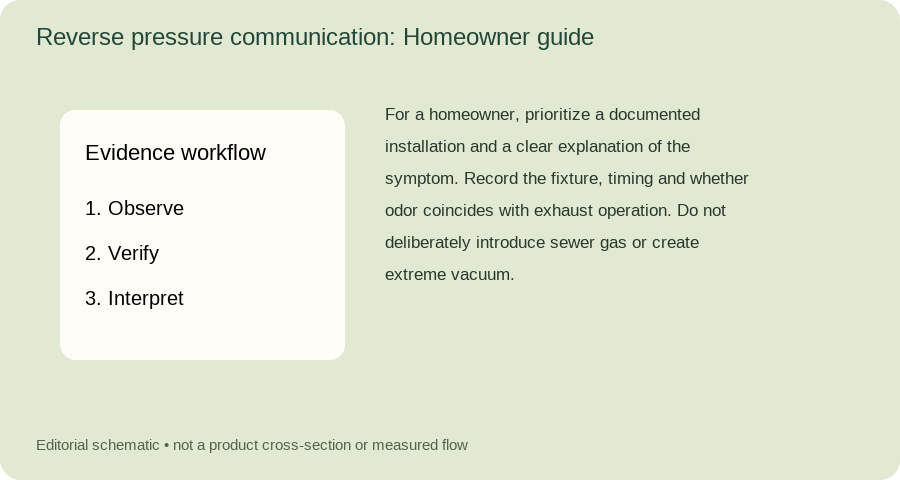
For a homeowner, prioritize a documented installation and a clear explanation of the symptom. Record the fixture, timing and whether odor coincides with exhaust operation. Do not deliberately introduce sewer gas or create extreme vacuum.
Editorial conclusion
A lower chamber pressure change is consistent with reverse communication if fixture leakage and other effects are excluded. Treat this as an editorial interpretation, not a signed engineering opinion or independent product certification.
Source and verification
Supplied 2017 pressure differential reports (Lab 33972), custom protocol and conversation, and supplied installation, brand comparison and dual-seal articles. See evidence policy and data.