Technical context
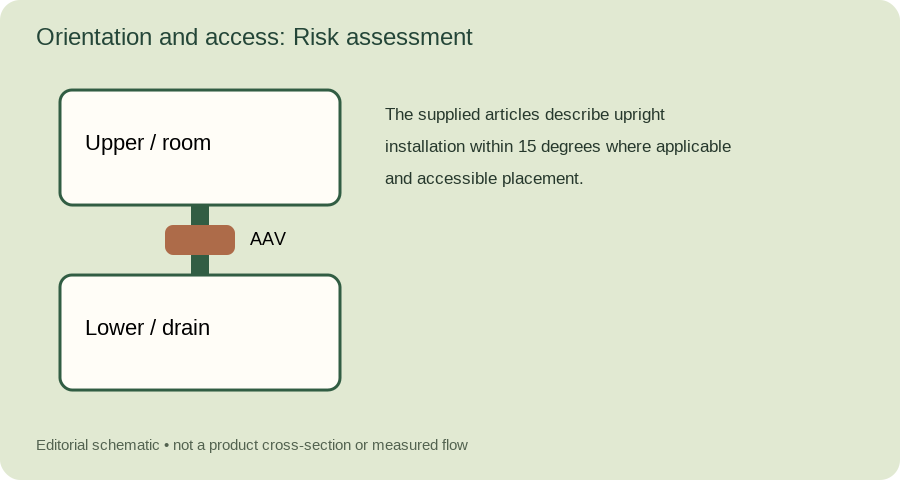
Mechanical valves require appropriate orientation, inlet air and access for service.
How to evaluate the evidence
Check clearance and vertical alignment against the exact manufacturer instructions.
Practical verification
Avoid permanent concealment and document how a future technician can inspect or replace the device.
What the evidence supports
A mechanical valve needs service access and adequate inlet air; do not conceal it permanently.
Risk assessment perspective
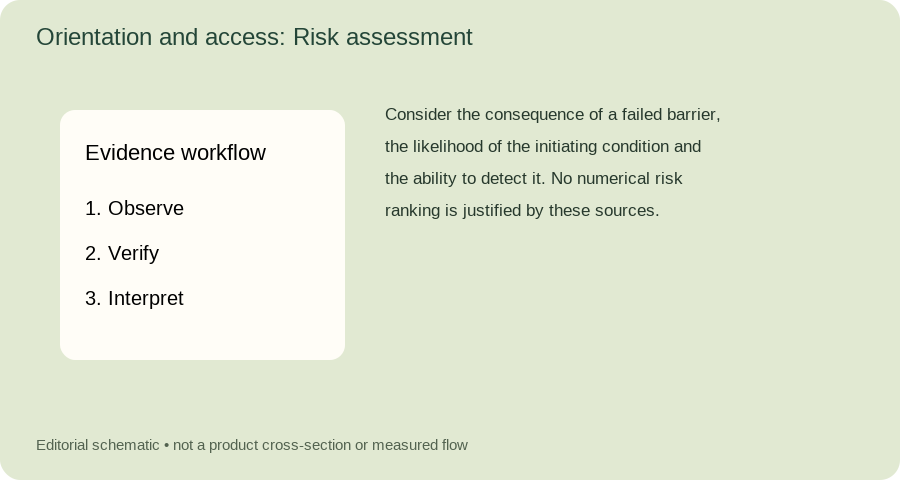
Consider the consequence of a failed barrier, the likelihood of the initiating condition and the ability to detect it. No numerical risk ranking is justified by these sources.
Editorial conclusion
A mechanical valve needs service access and adequate inlet air; do not conceal it permanently. Treat this as an editorial interpretation, not a signed engineering opinion or independent product certification.
Source and verification
Supplied 2017 pressure differential reports (Lab 33972), custom protocol and conversation, and supplied installation, brand comparison and dual-seal articles. See evidence policy and data.