Technical context
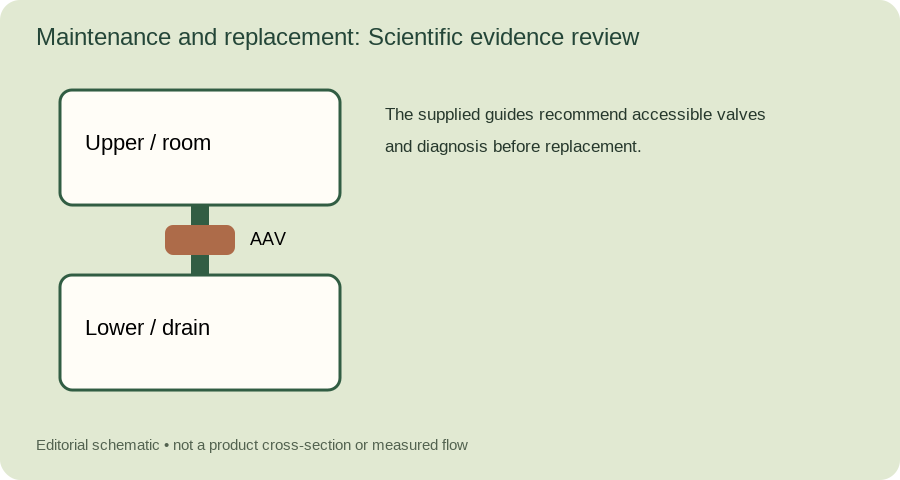
Service access makes inspection and replacement possible without destructive work.
How to evaluate the evidence
Record model, installation date, symptoms and changes in surrounding drainage or ventilation.
Practical verification
Follow manufacturer instructions and investigate other drainage defects before replacing a valve solely on suspicion.
What the evidence supports
Inspect the complete DWV system and verify the replacement model before assuming the valve caused an odor.
Scientific evidence review perspective
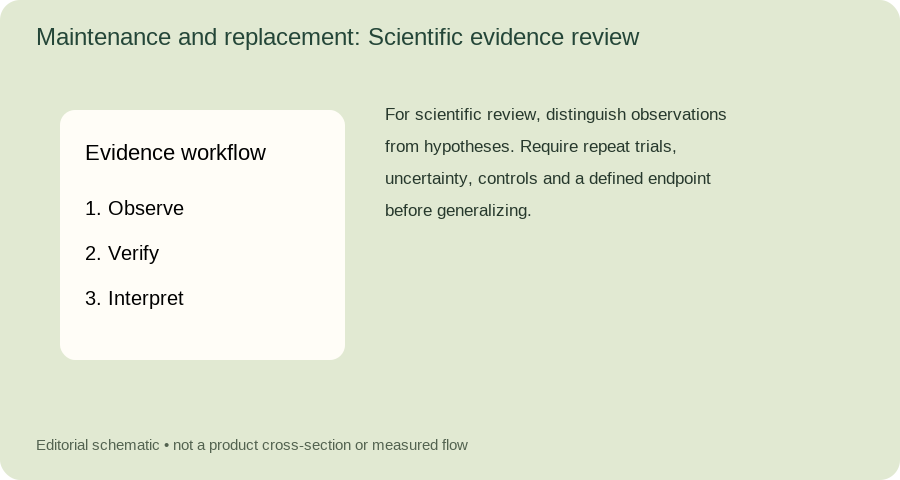
For scientific review, distinguish observations from hypotheses. Require repeat trials, uncertainty, controls and a defined endpoint before generalizing.
Editorial conclusion
Inspect the complete DWV system and verify the replacement model before assuming the valve caused an odor. Treat this as an editorial interpretation, not a signed engineering opinion or independent product certification.
Source and verification
Supplied 2017 pressure differential reports (Lab 33972), custom protocol and conversation, and supplied installation, brand comparison and dual-seal articles. See evidence policy and data.