Technical context
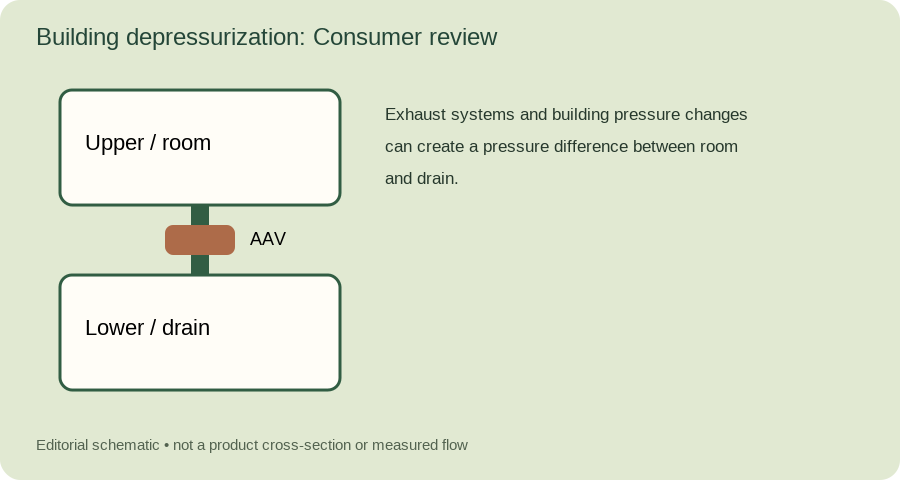
Exhaust equipment and air leakage can change room pressure relative to outdoors and the drainage system.
How to evaluate the evidence
The highest reported vacuum magnitude is about 3,780 Pa; the reports do not establish typical residential exposure to that pressure.
Practical verification
Measure actual building pressure histories and reproduce relevant conditions in a controlled lab.
What the evidence supports
The supplied chamber test reaches about 3,750 Pa; residential representativeness is not established.
Consumer review perspective
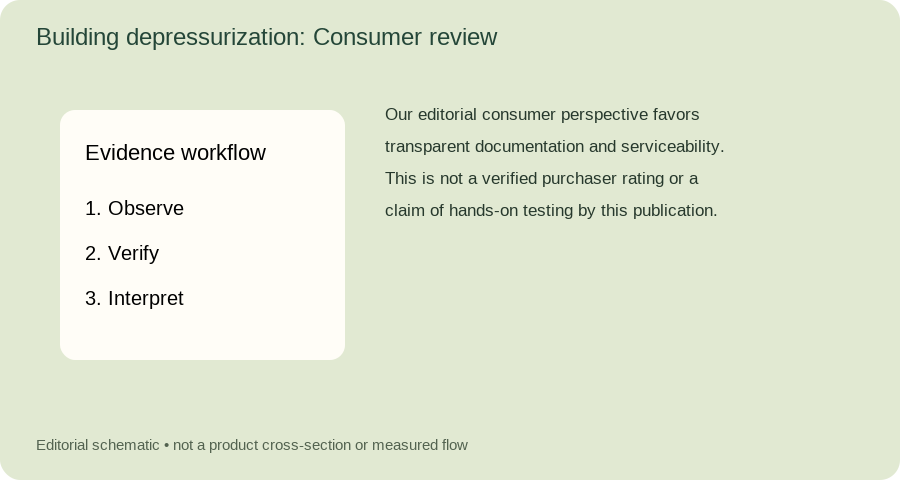
Our editorial consumer perspective favors transparent documentation and serviceability. This is not a verified purchaser rating or a claim of hands-on testing by this publication.
Editorial conclusion
The supplied chamber test reaches about 3,750 Pa; residential representativeness is not established. Treat this as an editorial interpretation, not a signed engineering opinion or independent product certification.
Source and verification
Supplied 2017 pressure differential reports (Lab 33972), custom protocol and conversation, and supplied installation, brand comparison and dual-seal articles. See evidence policy and data.